
What is included?
-
Executive bus transportation, with air conditioning, restroom, and minibar for over 30 passengers. Below 30 passengers, transportation may be done in a minibus and below 13 in a van (subject to acceptance by families and the location)
Snack on board on the way
Water available during the trip on the bus
Breakfast, lunch, and afternoon snack as described in the itinerary below
02 Accompanying teachers from the school by bus
01 Accredited Tour Guide from the Ministry of Tourism accompanying the group throughout the trip - Mandatory by Law
01 Rescuer
Dairy guided by educators, veterinarians, and agricultural dairy technicians
Team of monitors and educators uniformed and equipped with radio communication at Fazenda Primavera da Serra
Travel insurance
Admission and scheduling.
Raincoat for students (if necessary)
WhatsApp group with guardians before and during the entire trip for sending information and LOTS OF PHOTOS AND VIDEOS
What is not included?
- Extras of any nature
- Any type of drink or food not described as included in the Itinerary
Gallery
Introduction
Tavolaro Open Doors
The Tavolaro Open Doors program was created in the 1990s to bring customers closer to the industry, thus fostering the use of regional products in a billion-dollar market dominated by multinationals.
During the visit to the dairy, students will learn about the production process of dairy products and will practically experience mechanical and manual milking, artificial insemination, and calf feeding, as well as follow the entire production process of dairy products, from the arrival of raw materials to the final product.
Topics covered: Origin of cheese – Types of milk – Buffalo milk – Sanitary inspection – Public health – Pasteurization and ultra-pasteurization – Cheese and yogurt production – Bacterial culture – Ferments – Economic importance of milk and derivatives – Laboratory – Quality control – Molds and yeasts – Wastewater treatment – Environmental preservation – Manufacturing practice – Milk packaging – Product tasting.
Content: Rural Part:
-History of milk introduction in Brazil, nutritional importance of milk, essential need for the health of the mammary gland 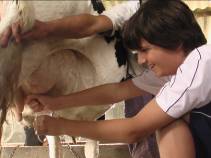 of the cow on the quality of various products and by-products, nutritional aspects of dairy cattle, the importance of each professional in the milk production chain.
-The importance of artificial insemination, genetic improvement, and transgenics. Use of agro-industrial waste in animal feeding. The territorial and economic dispute between the sugar-alcohol sector and livestock.
-Diseases of importance transmitted from animals and food to humans, a brief approach to the treatment of organic waste produced by the industry and farm, the difference between allergy and lactose intolerance.
-Importance of the agribusiness "milk" in the national and global context, environmental impacts and polluting potential of agribusiness "milk". Visit to the wastewater treatment station, with brief notions about the purification of wastewater and its return to the environment.
Industrial Part:
-Importance of aquifers and water quality in industrial processes, use of biomass in the production of thermal energy for various industrial processes, importance of separating oils and greases and their influence on the wastewater treatment station.
-Pasteurization and food preservation methods: Emergence, importance, and reflections. An example from part of the presentation: “We enter the industry and follow the pasteurization process, where we explain how this process works. After pasteurization, we follow the destinations of the milk in the industry and its processes, from the simple packaging of bagged milk, or “soft belly,” as it is also known, to the production of any other derivative, focusing on cheese production, especially fresh cheese that students will be able to follow the manufacturing, yogurts, and dairy drinks with their main differences in taste and prices.”
-The different types of milk, and their economic, sanitary, and environmental impacts. 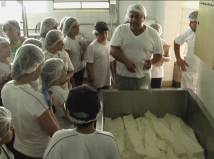
General Approach:
-The importance of the secondary sector and small agro-industry as generators of jobs and income, the importance of the tertiary sector of the economy (stores that reach the final consumer).
Environmental impacts of the secondary sector and the need for its internalization:
-The dispute between rural activities, rural tourism, and the tourist vocation of Brotas and its impacts.
GEOGRAPHICAL GUIDANCE AT FAZENDA PRIMAVERA DA SERRA IN BROTAS
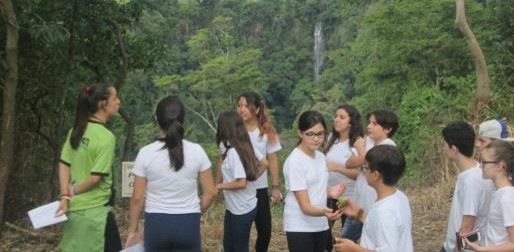
At this farm from 1908, students will be able to learn an incredible story of degradation and recovery, participate in a trail full of knowledge and adventure, and workshops in archaeology or paleontology, learn about the daily life of the property, visualize the geography of the region from a 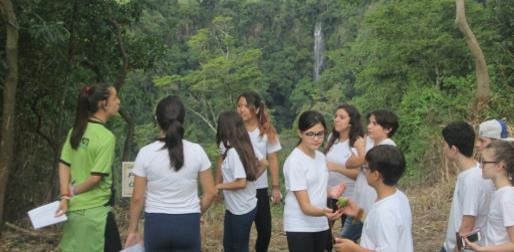 viewpoint, and participate in an orientation activity or about food production processes.
Orientation activity – Students will have to follow a path marked by PCs (Control Points) using compasses, maps, clipboards, and pens, answering questions about the environment. During the activity, students will work on skills such as leadership, calculations, location, teamwork, overcoming obstacles, and respect for nature.
Pedagogical Project created and executed by our partner company Ivian Educational Expeditions
Related terms
Important notes
✅ MANDATORY DOCUMENTATION
According to Federal Law, it is MANDATORY for the student to have their:
- ORIGINAL ID OR ORIGINAL DRIVER'S LICENSE OR ORIGINAL BIRTH CERTIFICATE accompanied by another identification with name and photo (e.g., School ID) OR ORIGINAL PASSPORT. Authenticated copies are NOT accepted by law.
*Digital documents are also accepted, but there is a risk of the phone running out of battery or having issues, making access impossible.
** We remind you that we cannot delay departure, and without the student's ORIGINAL identification document, boarding will not be possible. **
✅MEDICATIONS AND HEALTH
We ask for attention when filling out the MEDICAL FORM. It is essential to ensure the well-being and safety of the children.
- If the student is using any continuous or specific medication, we ask that it be sent in a bag labeled with the child's name, containing:
Medication name
Dose
Administration time
Medical prescription
Important instructions (if any)
- These medications must be delivered directly to the Trip Guide at the time of boarding.
IMPORTANT:
- - We ask that you do not send medications with the students.
- We are not responsible for medications that are not delivered to the responsible team.
ATTENTION
- Reinforce with the students that they should not self-medicate.
- Also advise them not to offer medications to their peers.
- Any discomfort should be reported to the responsible Tour Guide.
- Those with Health Insurance should bring their insurance card.
✅UNIFORM AND CLOTHING
- Wearing the uniform is mandatory throughout the trip, as it facilitates the identification of students. Remember to also send a complete change of clothes for any needs.
- We suggest that students wear comfortable clothes, sneakers or closed shoes, and bring a jacket, insect repellent, sunscreen, and a cap.
✅During the trip, the use of speakers or sound boxes is not allowed, in respect of each student's choice. They may use headphones if they wish.
✅Water will be available on the bus. We suggest that students bring a water bottle.
✅We advise that students do not bring cell phones and valuables, as they will be responsible for keeping them safe.
📱 USEFUL PHONE NUMBERS
Brazolin Travel and Tourism – 17 99121-2920 (business hours) / Daniela: 17 98119-9941 / Fernanda 17 98114-6455


