
What is included?
-
Transportation in an executive bus, with air conditioning, toilet, and minibar for over 30 passengers. Below 30 passengers, transportation may be done in a minibus and below 13 in a van (subject to family acceptance and location)
Snack on board on the way
Water available during the trip on the bus
Breakfast, lunch, and afternoon snack as described in the itinerary below
02 accompanying teachers from the school by bus
01 accredited tour guide from the Ministry of Tourism accompanying the group throughout the trip - Mandatory by Law
01 Rescuer
Dairy guided by educators, veterinarians, and agricultural dairy technicians
Team of monitors and educators uniformed and equipped with radio communication at Fazenda Primavera da Serra
Travel insurance
Admission and scheduling.
Raincoat for students (if necessary)
WhatsApp group with guardians before and during the entire trip for sending information and LOTS OF PHOTOS AND VIDEOS
What is not included?
- Extras of any nature
- Any type of drink or food not described as included in the Itinerary
Gallery
Introduction
Tavolaro Open Doors
The Tavolaro Open Doors program was created in the 1990s, with the purpose of bringing customers closer to the industry, thus fostering the consumption of regional products in a multi-million dollar market dominated by multinationals.
During the visit to the dairy, students will learn about the production process of dairy products and will practically experience mechanical and manual milking, artificial insemination, and feeding of calves, as well as follow the entire production process of dairy products, from the arrival of raw materials to the final product.
Topics covered: Origin of cheese – Types of milk – Buffalo milk – Sanitary inspection – Public health – Pasteurization and ultra-pasteurization – Cheese and yogurt production – Bacterial culture – Ferments – Economic importance of milk and dairy products – Laboratory – Quality control – Molds and yeasts – Wastewater treatment – Environmental preservation – Manufacturing practice – Milk packaging – Product tasting.
Content: Rural Part:
-History of milk introduction in Brazil, nutritional importance of milk, essential need for the health of the mammary gland 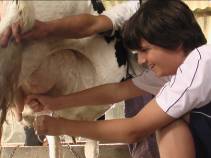 of the cow on the quality of various products and by-products, nutritional aspects of dairy cattle, the importance of each professional in the milk production chain.
-The importance of artificial insemination, genetic improvement, and transgenics. Use of agro-industrial waste in animal feed. The territorial and economic dispute of the sugar-alcohol sector with livestock.
-Diseases of importance transmitted from animals and food to humans, brief discussion on the treatment of organic waste produced by the industry and farm, the difference between allergy and lactose intolerance.
-Importance of the agribusiness "milk" in the national and global context, environmental impacts and pollution potential of agribusiness "milk". Visit to the wastewater treatment station, with brief notions about the purification of wastewater and its return to the environment.
Industrial Part:
-Importance of aquifers and water quality in industrial processes, use of biomass in the production of thermal energy for various industrial processes, importance of separating oils and fats and their influence on the wastewater treatment station.
-Pasteurization and food preservation methods: Emergence, importance, and reflections. An example from part of the presentation: “We enter the industry and follow the pasteurization process, where we explain how this process works. After pasteurization, we follow the destinations of the milk in the industry and its processes, from the simple packaging of bagged milk, or "soft belly", as it is also known, to the production of any other derivative, focusing on cheese production, especially fresh cheese that students will be able to follow the manufacturing, yogurts, and dairy drinks with their main differences in both taste and prices.”
-The different types of milk, and their economic, sanitary, and environmental impacts. 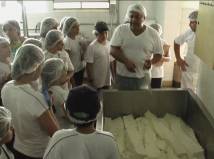
General Approach:
-The importance of the secondary sector and small agro-industry as job and income generators, the importance of the tertiary sector of the economy (stores that reach the final consumer).
Environmental impacts of the secondary sector and the need for its internalization:
-The dispute between rural activities, rural tourism, and the tourist vocation of Brotas and its impacts.
GEOGRAPHICAL GUIDANCE AT FAZENDA PRIMAVERA DA SERRA IN BROTAS
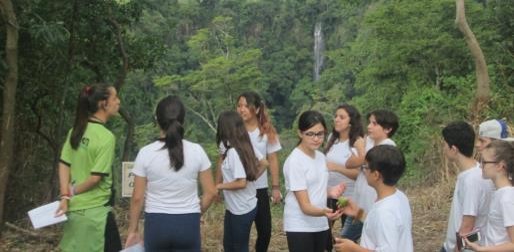
At this farm from 1908, students will be able to learn an incredible story of degradation and recovery, participate in a trail full of knowledge and adventure, and workshops on archaeology or paleontology, get to know the daily life of the property, visualize the geography of the region from a 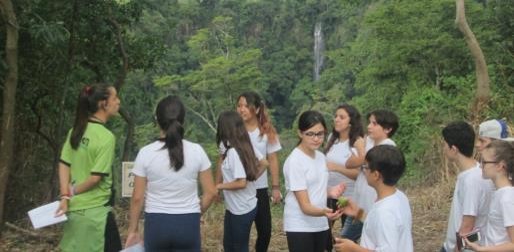 viewpoint and participate in an orientation activity or about food production processes.
Orientation activity – Students will have to follow a path marked by PCs (Control Points) using compasses, maps, clipboards, and pens, answering questions about the environment. During the activity, students will work on skills such as leadership, calculations, location, teamwork, overcoming obstacles, and respect for nature.
Pedagogical project created and executed by our partner company Ivian Educational Expeditions
Related terms
Important notes
✅ MANDATORY DOCUMENTATION
In accordance with Federal Law, the pupil MUST have the following with them throughout the trip:
- ORIGINAL RG OR ORIGINAL CIN OR ORIGINAL BIRTH CERTIFICATE accompanied by another form of identification with their name and photo (e.g. school ID card) OR ORIGINAL PASSPORT. Certified copies are NOT accepted by law.
*Digital documents are also accepted, but there is a risk that the mobile phone may run out of battery or have problems, making them inaccessible.
** Please remember that we cannot delay departure, and boarding will not be possible without the pupil's ORIGINAL identity document. **
✅MEDICINES AND HEALTH
Please take care when completing the MEDICAL FORM. It is essential for ensuring the children's well-being and safety.
- If the pupil is taking any regular or specific medication, please send it in a wash bag labelled with the child's name, containing:
Name of medication
Dosage
Time of administration
Medical prescription
Important instructions (if any)
- The above medication must be handed directly to the Tour Guide at the time of boarding.
IMPORTANT:
- - Please do not send medication with the pupils.
- We accept no responsibility for medication that is not handed to the responsible team.
PLEASE NOTE
- Remind pupils that they must not self-medicate.
- Also tell them not to offer medication to their classmates.
- Any discomfort must be reported to the responsible Tour Guide.
- Anyone with a Medical Assistance Plan must bring their membership card.
✅UNIFORM AND CLOTHING
- Uniform must be worn throughout the trip, as it makes pupils easier to identify. Remember to also pack a complete change of clothes in case they are needed.
- We recommend that pupils wear comfortable clothes and trainers or closed-toe shoes, and bring a warm layer, insect repellent, sun cream and a hat.
✅The use of loudspeakers or speakers is not permitted during the trip, out of respect for each pupil's preferences. They may use headphones if they wish.
✅Water will be available on the coach. We recommend that pupils bring a water bottle.
✅We advise pupils not to bring mobile phones or valuables, as they will be responsible for looking after them themselves.
📱 USEFUL TELEPHONE NUMBERS
Brazolin Viagens e Turismo – 17 99121-2920 (office hours) / Daniela: 17 98119-9941 / Fernanda 17 98114-6455


