
What is included?
- Transportation by Santa Rita bus company, minibus, or van with air conditioning, TV
Onboard snack and drink on the way there and water on the way back
Lunch at Zulai Temple with buffet
Guided visit to the Temple
1 Accredited Tour Guide from Mtur by bus
Travel insurance
What is not included?
- Optional tours
- Extras of any kind
- Expenses at gas stations
- Any type of drink or food not described as included in the Itinerary
Images
Introduction
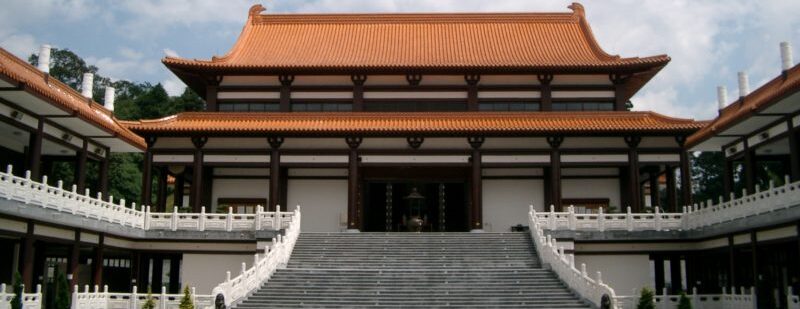
Zulai Temple, located in Cotia in the metropolitan region of São Paulo, is the first temple of the Fo Guang Shan Monastery in Latin America.
In April 1992, Venerable Master Hsing Yün was invited to officiate the consecration of the Kuan Yin Buddhist Temple in São Paulo, during which Mr. and Mrs. Chang, generous disciples, were present at the ceremony and were filled with joy upon hearing the Dharma words of the Venerable Master. Repeating the gesture of the noble Anathapindika, the Chang couple donated their family site, which became the temple named Zu Lai by the Venerable Master. On that same occasion, the Venerable also established the headquarters of the International Buddha Light Association (Blia), whose first president was the upasaka Mr. Shih Tze Lin. Among the group of monks accompanying the Venerable Master, Reverend Jue Cheng (Master Sincerity) was tasked with staying here to propagate the Dharma.
Upon its creation, Zulai Temple maintains the tradition of regularly conducting practices and ceremonies of the Chan and Pure Land Buddhist Schools, officiating ceremonies of “Eight Precepts” and meditation retreats. Guided by the precepts of Humanistic Buddhism, the actions that Zulai Temple and Blia undertake, since its inception, are based on four pillars established by the Venerable Master: cultural, educational, social actions, and religious practices. Both entities also seek to integrate the various Buddhist traditions in Brazil, participating in joint activities with other temples, such as those that occur during the Vesak celebrations. To this day, Zulai Temple has been considered the largest Buddhist temple in South America.
Throughout its first eleven years of existence, Zu Lai has been carrying out an increasing number of activities with a growing influx of disciples and supporters, expanding to such an extent that it could no longer accommodate the many people who flocked to it.
The disciples Shih Tze Lin, Liu Shie Lin, and Hong Tsu Ho then made the vow to build a new temple, relying on the effort and generosity of Blia members from Brazil, Paraguay, Argentina, Chile, Taiwan, Mainland China, the United States, and many other people from various corners of the world, acquiring additional neighboring land lots for this purpose.
In May 2000, the cornerstone for the construction of the new building was laid, which would have 10,000 m2 of built area, on a total area of 150,000 m2. Its design was inspired by the architectural style of the Tang Dynasty palaces, integrating aspects of modern Western architecture at the same time. The works were developed in collaboration by Chinese, Taiwanese, Japanese, and Brazilian architects, and the construction was completed in October 2003, thus giving rise to the “Pure Land” of Humanistic Buddhism in South America.
In line with the same principles of the Fo Guang Shan Monastery, Zulai Temple seeks to propagate the Dharma, developing talents, bringing benefits to society, and purifying hearts and minds through cultural and educational activities, social actions, and religious practices.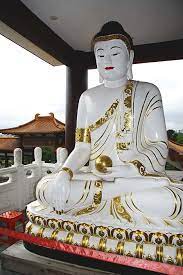
Continuing along the path pointed out by Venerable Master Hsing Yün, the temple seeks to develop various studies that apply to everyday life, in addition to “nationalizing” the teachings of the Buddha while respecting the aspects of the local culture that embraces its doctrine, making it possible to carry out projects such as: courses in Buddhist philosophy, study groups, and reading circles on the Dharma, creation of the “Children of Buddha Project” through the Foundation of the same name and through its Translation Center, which has been working on disseminating Buddhist teachings in Portuguese.
Since then, Zulai Temple has been fulfilling its mission to promote these four pillars to solidify and nationalize the principles of Humanistic Buddhism in Brazil.
And so, on October 5, 2003, Venerable Master Hsing Yün returned to Brazil to consecrate the new building of Zulai Temple, which celebrated its twenty years on Brazilian soil on April 24, 2012.
Print Version
Detailed Itinerary
02:00 - Presentation and Document Conference in front of the Economic Parking (in front of the airport)
02:30 - Departure to São Paulo with onboard snack
04:30 - Technical stop at Graal São Carlos Gas Station
06:30 - Technical stop for breakfast at Graal 56 Gas Station
09:30 – Guided Visit to Zulai Temple
12:00 – Lunch (included)
14:00 – Free Visit to Zulai Temple
15:00 – Departure back to São José do Rio Preto
23:00 – Estimated arrival and disembarkation in front of the Economic Parking


